Anime Fashion
Create school uniforms, casual anime looks, street fashion, character costumes, and original anime-inspired outfits.
What would your character wear in another world?
XPT's AI Clothes Changer helps you explore outfits, costumes, and original fashion ideas from simple prompts.
Try anime fashion, fantasy armor, cyberpunk looks, gothic styles, or an outfit that exists only in your imagination.
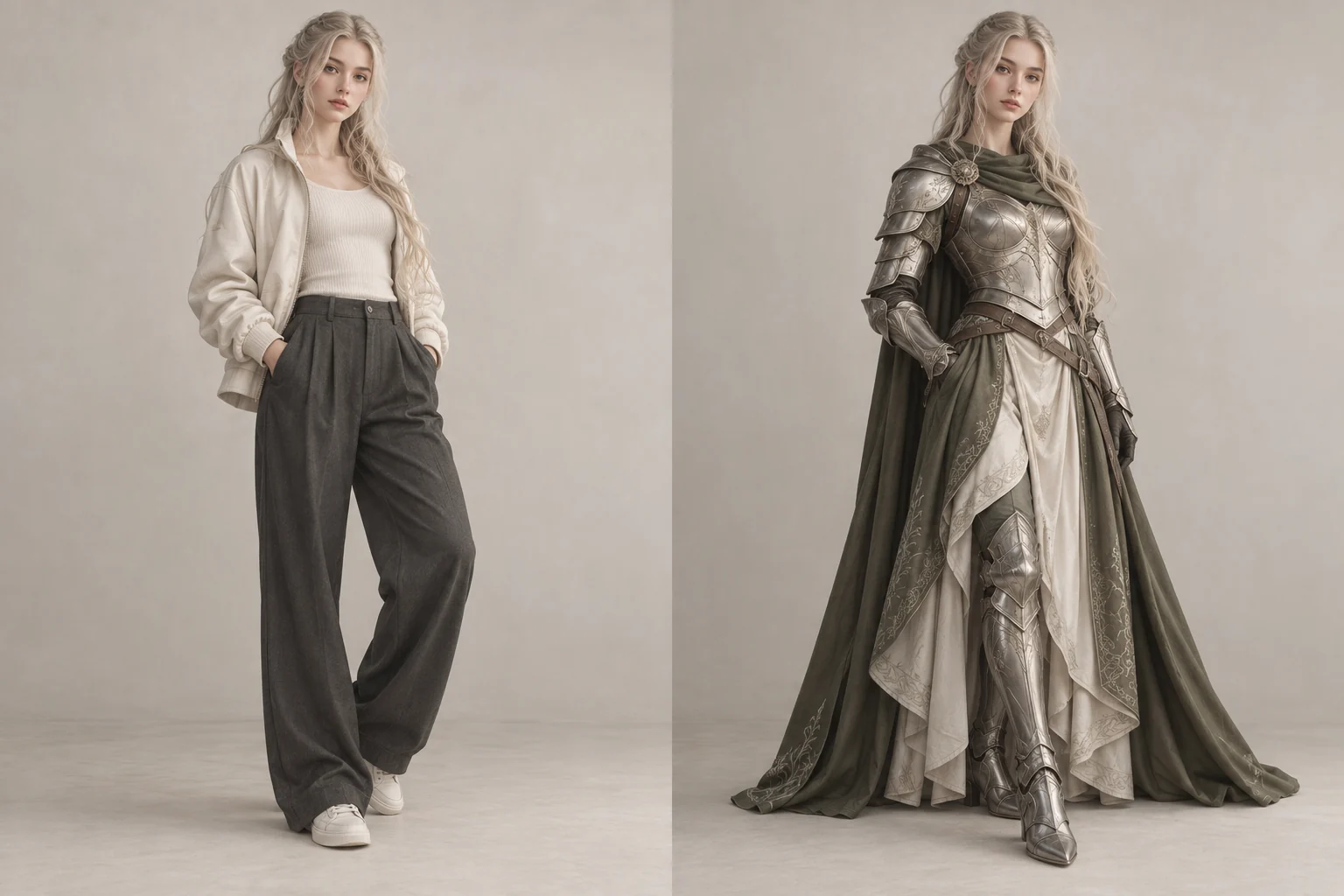
A great outfit does more than make a character look different.
It tells you something about them.
A worn leather coat suggests an adventurer.
Silver armor can turn someone into a royal knight.
A neon techwear jacket belongs in a different future.
An oversized hoodie gives the same character a completely different personality.
With XPT, clothing becomes another way to develop your character.
Start with a visual idea, personality, story, or world.
Then design a look that belongs there.
Your character doesn’t have to dress in any single way.
Explore different fashion directions and mix them into something new.
Create school uniforms, casual anime looks, street fashion, character costumes, and original anime-inspired outfits.
Design armor, mage robes, royal clothing, adventurer gear, ceremonial costumes, and clothing for fictional worlds.
Explore techwear, futuristic jackets, metallic materials, neon details, utility clothing, and sci-fi fashion.
Create darker looks with layered fabrics, leather, lace, dramatic shapes, jewelry, and detailed accessories.
Try streetwear, suits, dresses, jackets, casual outfits, and contemporary fashion concepts.
Mix styles, materials, colors, and fictional ideas to create clothing that does not exist anywhere else.
Upload the character, portrait, artwork, or AI-generated person you want to style.
Write the clothing idea you have in mind, including colors, materials, details, or aesthetic.
Generate the outfit and adjust your description to explore more styling directions.
Imagine one character.
Now imagine where they could belong.
“Dark silver knight armor with engraved shoulder plates, a long black cape, leather gloves, and subtle royal details.”
“Layered black techwear with a cropped futuristic jacket, metallic accessories, neon blue details, and heavy boots.”
“A structured black uniform with silver buttons, dark red details, leather shoes, and an elegant gothic coat.”
“A clean white utility suit with flexible black panels, lightweight armor, and soft orange illuminated details.”
The character becomes part of each world through what they wear.
Not sure what clothes to create?
Start with the character instead.
They avoid attention and spend most of their time studying old magic.
Try:
“Soft layered dark robes, worn leather boots, hidden pockets, a small silver pendant, and simple practical details.”
They are fast, reckless, and always prepared for trouble.
Try:
“A short weathered leather jacket, utility belt, fitted dark pants, heavy boots, fingerless gloves, and metallic accessories.”
They love speed and want everyone to know it.
Try:
“A fitted white racing suit with black panels, aerodynamic details, metallic gloves, and glowing orange lines.”
Personality gives the outfit a reason to exist.
Explore clothing as its own part of character creation instead of treating it as a small image correction.
Try unusual costumes, fictional fashion, fantasy armor, and experimental looks with fewer unnecessary restrictions.
Move between anime, fantasy, gothic, cyberpunk, modern fashion, and completely original styles.
Use normal language to explain the look you have in mind. You do not need fashion design terminology.
Create clothing around a character's personality, profession, world, role, or story.
Start from one fashion direction and develop many different versions from it.
An original character needs a visual identity.
Clothing is a significant part of it.
Think about:
A fantasy traveler might need practical layers, boots, belts, and a weathered cloak.
A royal character might wear structured fabrics, embroidery, jewelry, and ceremonial details.
A cyberpunk hacker might prefer lightweight techwear, hidden pockets, and electronic accessories.
Build the clothes around the character instead of choosing an outfit at random.
Some of the best character looks come from combining ideas.
Try:
“Oversized black streetwear inspired by medieval armor, with metal shoulder details and embroidered fantasy symbols.”
“Elegant gothic clothing made from futuristic reflective fabric, with silver mechanical details and a long structured coat.”
“Anime-inspired school fashion mixed with black techwear, utility straps, oversized sleeves, and neon accessories.”
“A futuristic royal outfit with dark velvet, glowing embroidery, metallic jewelry, and a dramatic high collar.”
You do not have to stay inside one fashion category.
A simple prompt can give you a starting point.
But details give an outfit its identity.
Think about:
Black and silver? Warm earth tones? Bright anime colors? White and neon orange?
Leather, velvet, silk, metal, denim, transparent fabric, futuristic materials?
Oversized, fitted, layered, flowing, armored, structured?
Embroidery, straps, buckles, glowing lines, jewelry, buttons, symbols, belts?
Gloves, boots, hats, masks, necklaces, bags, armor pieces?
Combine a few details to make the design more specific.
Characters do not wear one outfit forever.
Create a wardrobe around them.
This makes AI clothes changing useful for more than a single image.
You can develop a fuller visual identity around the character.
An AI Clothes Changer helps you visualize different outfits and clothing styles on a character or person using text prompts.
You can explore modern fashion, anime outfits, fantasy armor, gothic clothing, cyberpunk looks, costumes, formal wear, and original designs.
Yes. You can design clothing around an original character's personality, story, profession, or fictional world.
Yes. Explore school uniforms, anime streetwear, casual looks, costumes, fantasy clothing, and original anime fashion.
Yes. Create armor, mage robes, royal clothing, adventurer gear, ceremonial outfits, and other fantasy designs.
Yes. Combine different colors, materials, shapes, styles, and fictional ideas to describe an original outfit.
Yes. You can combine ideas such as fantasy and streetwear, gothic and futuristic fashion, or anime and techwear.
Yes. Include fabrics, materials, colors, patterns, accessories, and other details in your prompt.
Yes. An AI-generated character can be the starting point for different outfit and styling concepts.
No. Describe the look in everyday language. Start simple and add more details when needed.
From anime streetwear to fantasy armor, your character's outfit can become part of their personality, story, and world. Explore styles that fit the character—or invent something completely new.