To write fanfiction with AI, explain the version of canon you are using, identify the characters' current knowledge and relationship, and choose one scene objective. Draft a short passage, then revise it for voice and continuity before continuing. The fandom name helps establish a subject; your scene brief tells the AI which version of that subject matters.
The hardest part is often recognition. A draft can include the correct names and still miss why those characters matter to you. Use AI to explore possibilities while keeping your judgment about their behavior at the center of the process.
The tutorial below uses XPT for a short scene. After drafting, the same checks can help you revise a missing moment, an AU, or a longer fic.
How to Draft Fanfiction with XPT
1. Choose the Fic Type and Open XPT
Open the XPT AI Story Generator. In the request box, identify your fandom, continuity, and whether you want a missing scene, canon divergence, or AU.
Begin with a clear relationship to canon. A missing scene fills a gap without necessarily changing the established sequence. Canon divergence changes a decision and follows its consequences. An alternate universe changes the setting or circumstances while preserving selected traits and relationships.
These choices require different prompts. If you ask for a missing scene but leave the boundary vague, the draft might introduce a revelation that should alter the rest of the story. If you write an AU, preserving every original behavior may make little sense when the character's history has changed.
Write down three decisions: the continuity you are using, the point where your story begins, and the changes you permit. You can always revise them later, but an explicit boundary gives the draft something to follow.
2. Add the Canon the Scene Needs
Include the immediate context, character knowledge, and events that must remain unchanged. Ask XPT to flag missing information rather than fill it silently.
You do not need to paste an entire wiki. Include the facts that influence this scene: what just happened, who is present, what each person knows, and what must remain unresolved. Summarize reference material in your own words and use text you have the right to submit.
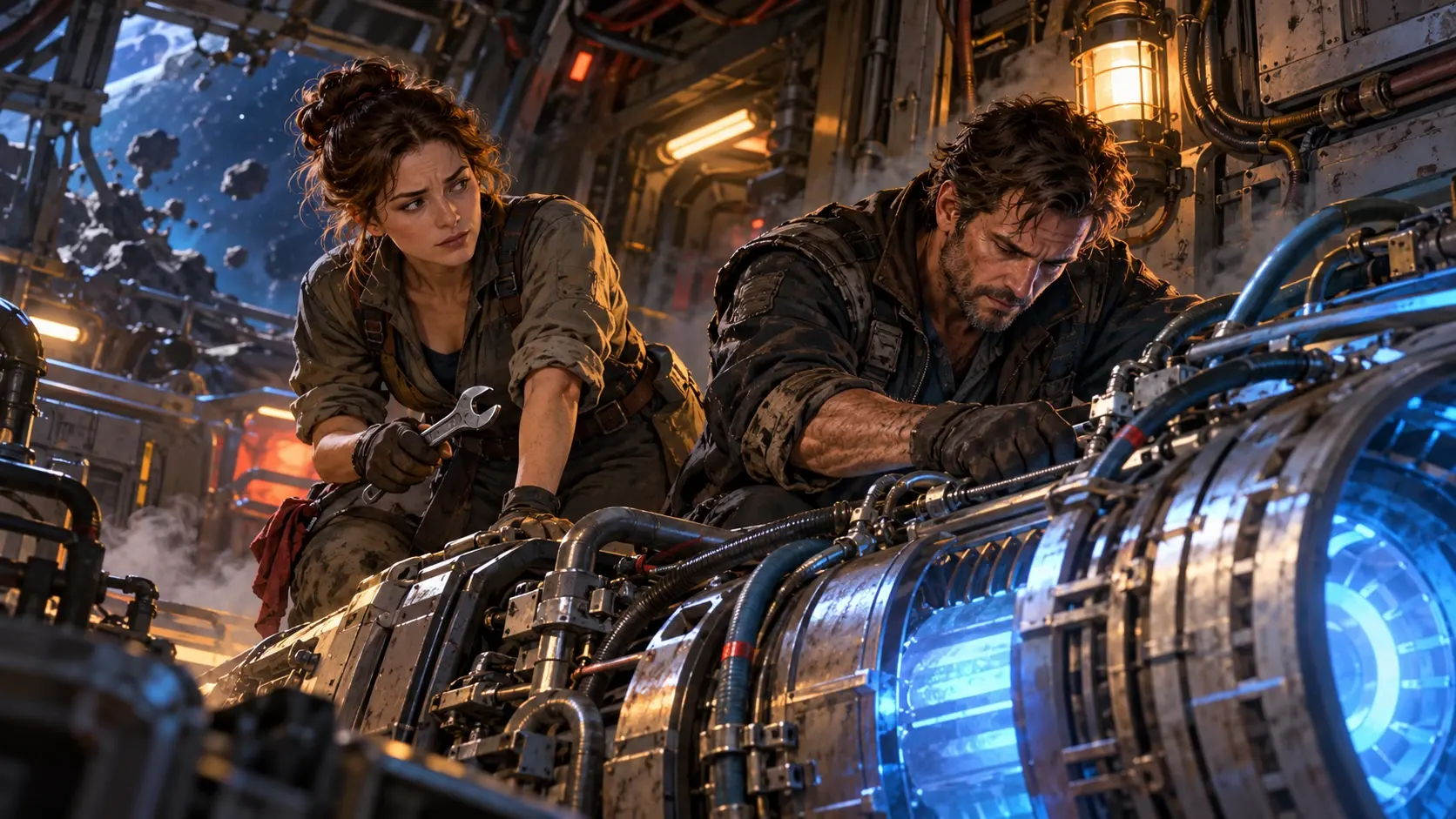
For a demonstration, imagine two characters in a fictional space-adventure setting. Captain Vale has returned from a failed rescue. Engineer Iri knows the ship was damaged but does not know Vale disobeyed orders. Their relationship is loyal but strained after an earlier argument. The scene should end with Iri agreeing to help repair the ship, not learning the whole secret.
That brief protects the scene from premature revelations. It also gives you a concrete check: does Iri's dialogue reveal knowledge the character should not have?
3. Describe How the Characters Speak
Add concrete voice notes to the same request. If an original character needs development, the AI Character Description Generator can help you explore a separate brief first.
“Sarcastic,” “brave,” and “kind” are broad traits. Explain how those traits appear under pressure. Vale may answer personal questions with operational details. Iri may challenge authority directly but show care by fixing something without being asked.
Give each character a different immediate goal. Vale wants repairs without questions; Iri wants an honest account before committing. Their dialogue now has friction even if neither raises their voice. A catchphrase is optional; conflicting intentions are doing the real work.
If you have already written the characters, provide a brief sample of your own prose. Describe what the model should preserve: sentence rhythm, amount of interiority, humor, or the balance between action and dialogue.
4. Generate a Scene with One Relationship Change
Adapt the prompt below, paste it into XPT, and generate a short scene. Check that the emotional change is earned before requesting a longer chapter.
Ask for a scene in which the relationship changes by one step. A slow-burn chapter might end with trust becoming possible, not a sudden declaration of love. A reconciliation scene can allow cooperation while leaving the deeper grievance intact.
Write a missing scene in my fictional space-adventure setting.
Characters: Captain Vale and engineer Iri.
Context: Vale returned from a failed rescue with a damaged ship.
Iri knows about the damage, not the disobedience of orders.
Vale avoids personal questions by discussing the mission.
Iri challenges evasions but shows care through practical help.
Use Iri's close third-person POV, past tense, and restrained humor.
Begin with Iri finding Vale trying to repair the engine alone.
End with Iri agreeing to help, while the reason for the failure stays hidden.
Draft one short scene. Do not resolve their earlier argument.
Revise in Three Passes
First, check canon and knowledge. Compare every consequential detail with the version you selected. Mark any invented power, relationship, location, or revelation that changes the story unintentionally.
Second, check voice. Remove the names from a stretch of dialogue and see whether the speakers remain distinguishable. If not, ask for a local revision that preserves their goals but changes how they pursue them. Do not solve this by adding a catchphrase to every line.
Third, check emotional pacing. Find the moment where the relationship turns and ask whether something in the scene earns it. A character should not forgive a longstanding betrayal simply because the draft needs a warm ending.
Keep an AU Recognizable Without Freezing It
For an AU, separate the traits you want to preserve from the history you are replacing. A protective character might remain protective in a university setting, but their habits would not necessarily resemble those of a battlefield commander.
Ask how the new context changes their expression of the trait. Instead of ordering a squad to retreat, they might take an unwanted shift for a friend or intervene in a difficult conversation. Recognition comes from the pattern of choices, not recycled dialogue.
Expand Only After the Scene Works
Before requesting the next chapter, save a compact summary of accepted events and relationship changes. Record what each character knows and what remains concealed. Include your new decisions when prompting again; do not assume an earlier draft is a reliable canon reference.
If you want a different outcome, branch from a named point. Label the alternate version and choose which branch you will continue. Mixing details from rejected versions is an easy way to create contradictions.
Before You Share the Fic
Review the current rules and disclosure expectations of the community where you intend to post. Also review relevant permissions and rights questions for the source material. This article does not certify that a particular fanwork may be published or monetized.
Give the fic a final human read for voice, continuity, and the emotional experience you wanted to create. The draft is useful when it helps you find your version of the scene, not simply when it gets the names right.
Write the Moment You Wanted to Find
Start with the missing moment you want to explore. Keep the draft that recognizes the characters, then revise it into your own version of the scene.