The best free AI novel generator depends on which part of the book you need help with. Some tools create a quick draft. Others are better for planning chapters, tracking characters, exploring scenes, or revising prose.
The ten options below have a free entry point or a free trial according to their published pages. A free trial is different from an ongoing free plan, and access may change. This comparison uses published features and terms; it is not a hands-on prose-quality ranking.
10 AI Novel Writing Tools Compared
| Tool | Free entry point | Best fit | Main trade-off |
|---|---|---|---|
| XPT | Novel generator presented as free | Conversational planning, chapters, and mature or unconventional fiction | Writers should keep their own chapter and canon notes |
| Squibler | Ongoing free tier with limited AI credits | Turning a premise into a structured draft | Full-length manuscript features are associated with paid plans |
| Sudowrite | Free trial | Fiction-focused drafting and revision with a Story Bible | Ongoing use requires a paid plan |
| NovelAI | Limited free trial | Interactive prose generation and story settings | Trial generations do not refresh regularly |
| ChatGPT | Ongoing free plan | Brainstorming, outlining, and scene feedback | General-purpose tool; novel structure needs active management |
| Claude | Ongoing free plan with usage limits | Discussing outlines and revising passages | Free usage is limited |
| Gemini | Access without a paid AI plan | Exploring premises and drafting outlines | Access and limits can vary |
| AI Dungeon | Free to play | Interactive, choice-driven storytelling | Its adventure format differs from a manuscript editor |
| Rytr | Ongoing free plan with a character allowance | Short passages and quick writing experiments | The free allowance is small for a novel |
| StoryGenerator | Free story generation | Testing a premise or generating a short story | Better suited to shorter pieces than managing a full novel |
Which Tool Should You Choose?
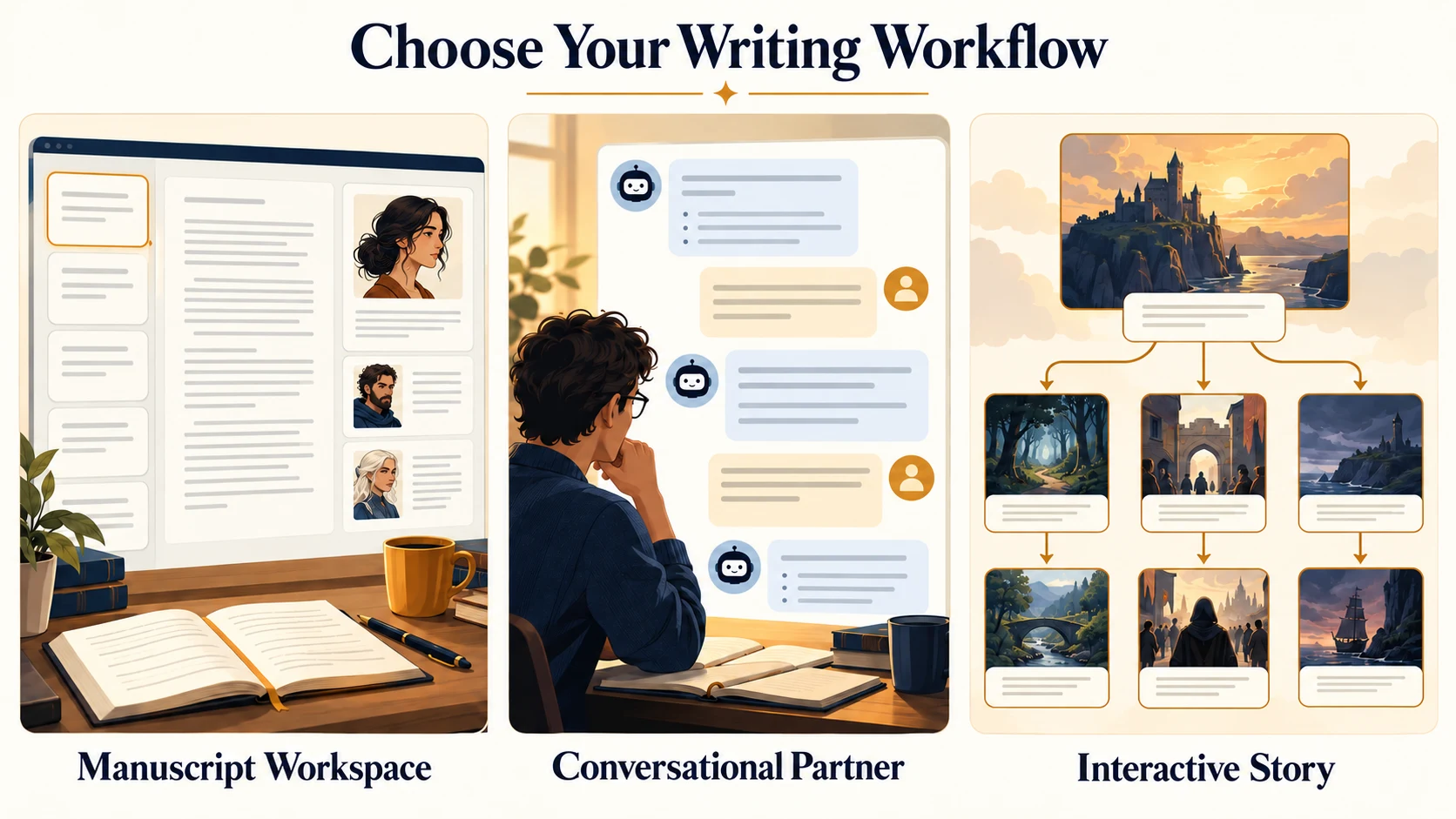
Choose a dedicated writing workspace if you want an editor built around manuscripts. Squibler focuses on drafting and organization; Sudowrite adds fiction-specific writing tools and a Story Bible. Check what remains available after their free allowance or trial ends.
Choose an interactive story tool if discovering the plot through choices matters more than producing a conventional manuscript. AI Dungeon is designed around that experience.
Choose a general AI assistant if you mainly want to discuss your outline, compare alternatives, or critique chapters. ChatGPT, Claude, and Gemini can help, but you will need to supply the story context and maintain your own project records.
Why XPT Is a Strong Starting Point
For writers who want to explore a novel through conversation, XPT brings the main planning and drafting tasks into one AI Novel Generator. Its published workflow starts with a premise, moves into a story bible and chapter structure, then drafts the book chapter by chapter. It also explicitly positions itself for mature, dark, and unconventional fiction.
That makes XPT especially relevant when creative direction is your priority: you can test an unusual premise, change a character arc, revise a chapter, or ask for a different subplot direction without treating the first generated manuscript as final.
The comparison has a practical limit. Sudowrite and Squibler offer dedicated writing environments, while XPT’s strength here is the conversational development process. If you need extensive manuscript formatting or a specialized editor, compare those workflows directly before choosing.
How to Start a Novel in XPT
Open the AI Novel Generator and begin with a compact brief:
“Help me plan an adult mystery novel. A museum conservator discovers that three paintings contain the same hidden figure, although they were created centuries apart. The central conflict is her decision to expose the discovery or protect the person who taught her to recognize it. Build a story bible, three-act outline, and chapter plan. Do not draft the novel yet.”
Once the structure works, request one chapter at a time. After each chapter, update a short record of what changed: character knowledge, timeline, relationships, clues, and open questions. Give that record back to XPT before drafting the next chapter.
If your premise needs a stronger chain of events first, explore alternatives with the AI Plot Generator.
The Best Free Option Is the One You Can Keep Using Well
Test two tools with the same premise. Ask each for a chapter outline, an opening scene, and a revision that preserves the established facts. Compare how much work it takes to get a result you would actually continue writing.
Free access gets the project started. Your outline, continuity notes, and editorial decisions are what help it become a novel.