A city where nobody can keep secrets. A spaceship whose crew receives a warning from its own future. A society that has solved aging but not inequality.
Science fiction begins with a question about what might be possible. A good sci-fi story explores what that possibility would cost.
To write a sci-fi story with AI, start with one speculative change, establish its limitations, give a character a personal reason to care, and build a plot around the consequences. Then use AI to draft scenes, test the logic of your world, and revise the story without losing its central idea.
You do not need a complete fictional universe before you begin. In fact, starting smaller often leads to better science fiction.
What Makes a Good AI-Generated Sci-Fi Story?
Science fiction is not simply a collection of futuristic objects.
Spaceships, artificial intelligence, advanced medicine, alien civilizations, and virtual realities can all appear in the genre. But technology becomes interesting when it changes what people can do—and what they must sacrifice.
Consider two premises.
Premise A: "In the year 2150, humanity has developed advanced artificial intelligence and interstellar spacecraft."
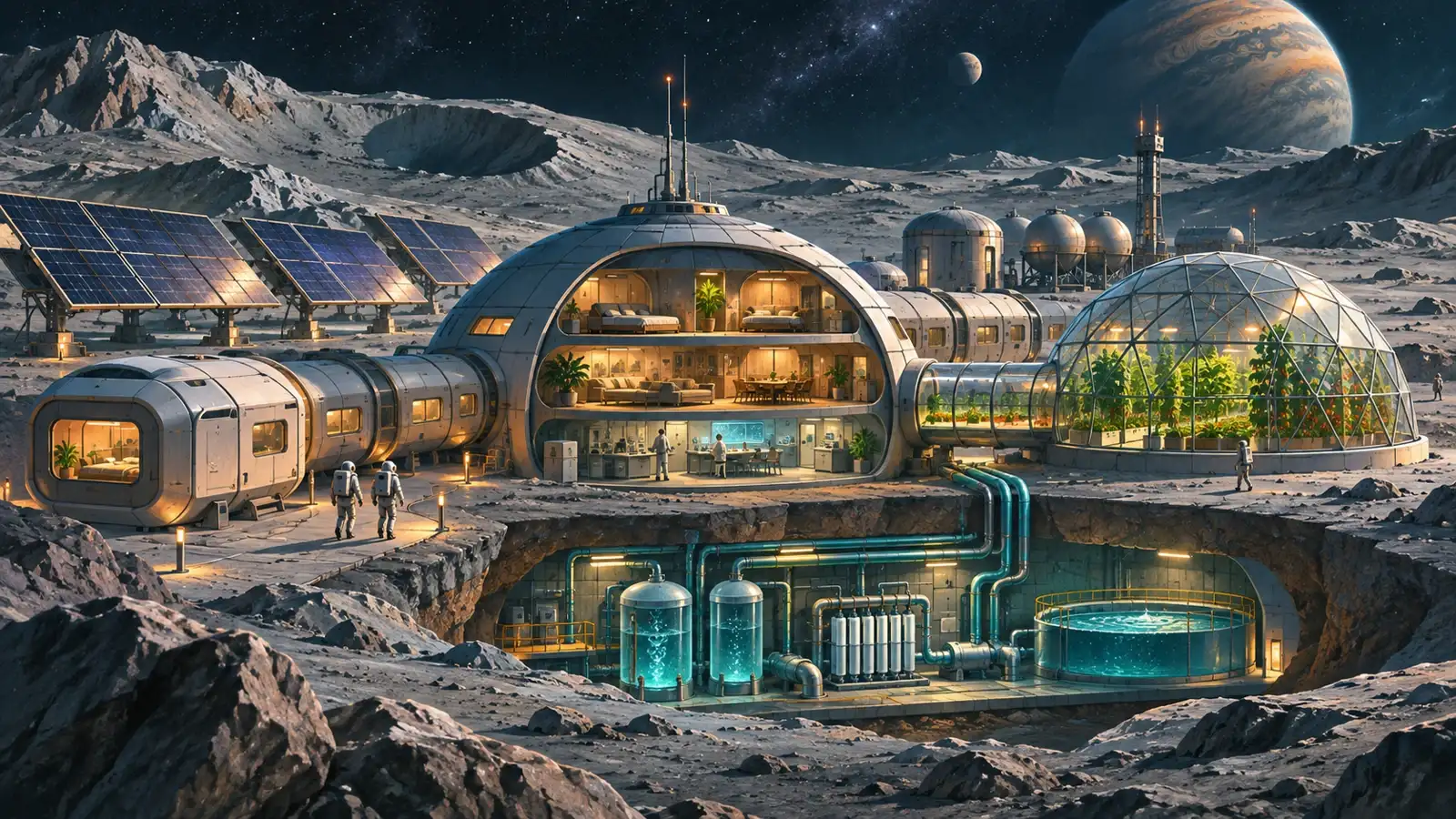
Premise B: "An orbital station can predict dangerous equipment failures two days in advance, but its emergency system can respond to only one warning at a time. A technician discovers that the next two predictions concern different sections of the station."
The first premise describes a setting. The second creates a situation.
It introduces a technological capability, a limitation, a character, and a difficult choice.
These are the building blocks worth developing with AI.
How to Write a Sci-Fi Story with XPT
1. Choose One Science-Fiction Concept
Start with a simple "what if" question.
For example:
- What if memories could be transferred between people but never copied?
- What if a city could predict disasters but not prevent all of them?
- What if an alien civilization communicated through changes in gravity?
- What if human beings could pause biological aging, but only while asleep?
- What if an artificial intelligence could inherit property after its owner's death?
Choose one concept rather than combining several unrelated inventions immediately.
Open the XPT AI Sci-Fi Story Generator and describe your idea.
Example prompt:
"Develop five original science-fiction story premises based on this concept: a space station can predict equipment failures 48 hours before they occur. For each premise, give me a protagonist, a practical limitation, a central conflict, and a difficult choice. Avoid solutions that make the technology unlimited."
The objective is not to generate the entire story yet. You are looking for a premise that can sustain conflict.
2. Establish the Rules of Your Fictional World
Readers can accept extraordinary technology when its behavior remains consistent.
Problems arise when an invention suddenly gains a new capability because the plot needs an easy solution.
Before drafting, define a few rules.
For the space-station premise, the rules might be:
| Element | Established rule |
|---|---|
| Prediction system | Estimates equipment failure risks up to 48 hours ahead |
| Reliability | Predictions are useful but not certain |
| Emergency response | The automated system can handle only one major intervention at a time |
| Human authority | The station's chief engineer can override the priority order |
| Consequence | An incorrect decision may leave another critical system unprotected |
These limitations are fictional choices, not claims about real engineering.
They make the story's decisions meaningful.
Ask AI to identify contradictions or unintended loopholes in your rules before continuing.
Worldbuilding prompt:
"Review these five technology rules for internal consistency. Identify situations where the rules create interesting consequences, and flag any loopholes that would make the central conflict too easy to solve. Do not invent additional capabilities without labeling them as proposals."
3. Create a Character Who Cannot Ignore the Problem
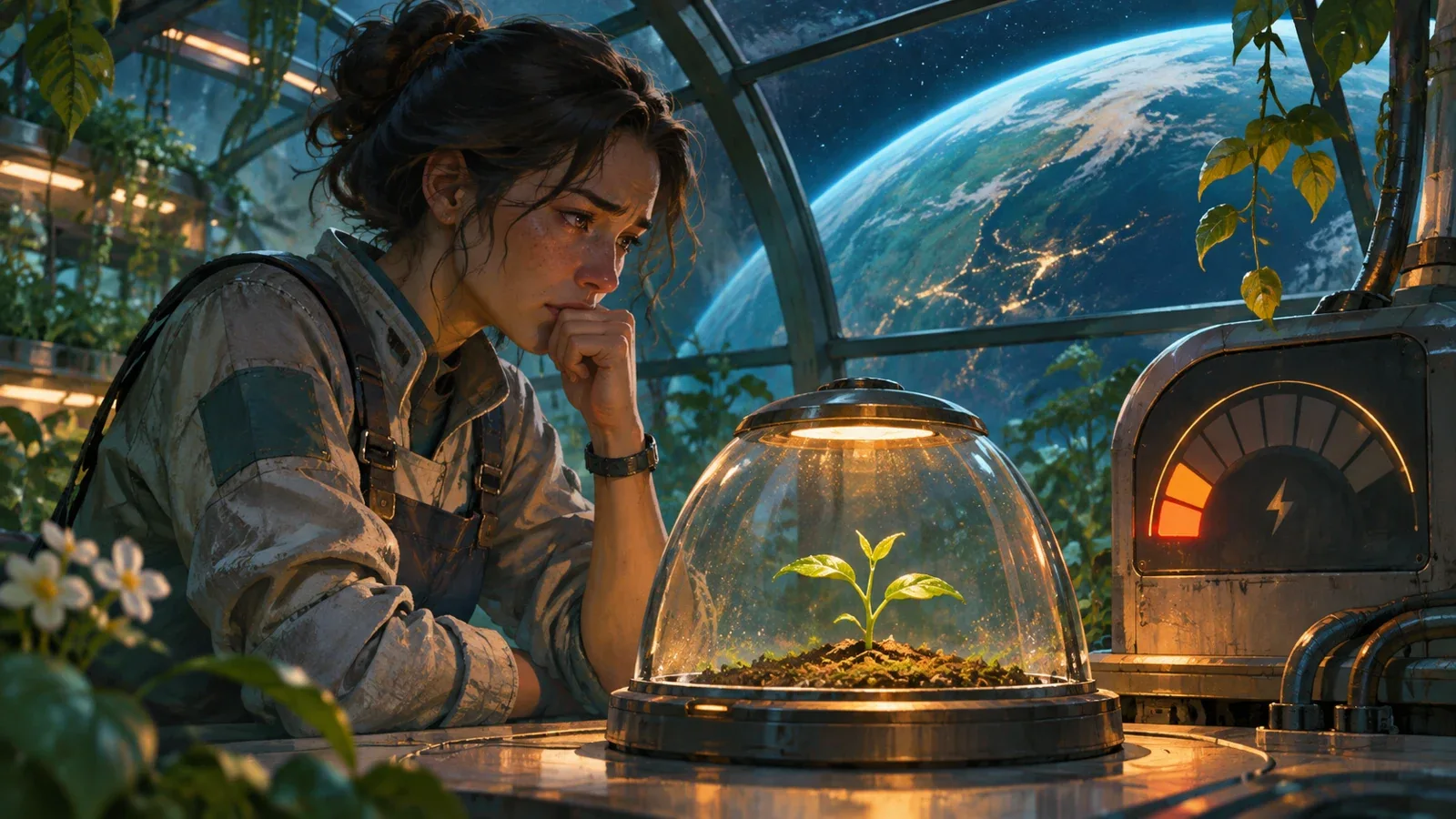
A technician may understand the system better than anyone else but lack the authority to act. A commander may have authority but insufficient information. A family member may have no technical knowledge yet face the greatest personal loss.
For the station story, imagine this protagonist:
Name: Imani Vale
Occupation: Junior maintenance engineer
Goal: Prevent a predicted life-support failure.
Obstacle: The emergency system has already assigned its only available intervention to a different repair.
Personal stake: Her younger brother works in the section at risk.
Flaw: She trusts technical evidence more readily than other people.
Now the speculative technology creates a personal dilemma.
Imani can challenge the prediction, override the system, or accept a decision she believes is wrong. Every option carries a cost.
A useful character prompt is:
"Create a psychologically believable protagonist for this science-fiction premise. Give her one professional strength, one personal flaw, one relationship that complicates her decision, and one belief that the story will challenge. Avoid making her either perfectly heroic or completely irrational."
4. Build a Sci-Fi Plot Around Cause and Effect
Once your world and protagonist are clear, create a short outline.
A five-beat structure is enough for an initial science-fiction short story.
Opening: Imani discovers a predicted failure in the station's life-support system.
Complication: The automated repair system is already committed to preventing a different failure in the station's power network.
Escalation: She discovers that overriding the repair priority could preserve life support but increase the risk of a station-wide blackout.
Climax: Imani must choose whether to override the system without enough information to guarantee the outcome.
Resolution: Her decision prevents one disaster but changes how the crew treats predictive technology and human responsibility.
Notice that the resolution does not require a miraculous invention.
The conflict is resolved through a choice that follows the established rules.
Use the AI Plot Generator to explore alternative developments while protecting the premise's limitations.
5. Generate the Opening Scene with AI
Once the plot exists, ask for a scene rather than the complete story.
Give AI enough information to handle the viewpoint, conflict, tone, and stopping point.
Ready-to-use sci-fi writing prompt:
"Write the opening 500 words of a science-fiction short story.
Setting: An orbital research station in the late 22nd century.
Protagonist: Imani Vale, a junior maintenance engineer.
Premise: The station's prediction system warns of equipment failures 48 hours in advance, but its automated emergency response can handle only one major intervention at a time.
Opening situation: Imani discovers a life-support warning while the emergency system is already assigned to protect the power network.
Tone: Restrained, intelligent, and tense.
Point of view: Close third person.
Writing instructions: Reveal the technology through Imani's actions and observations. Avoid lengthy explanations about the station's history. Do not introduce an easy technological solution. End when Imani realizes that somebody must choose which failure receives priority."
A focused prompt gives the model room to write while keeping the story anchored to your decisions.
Review the opening for clarity, pacing, and believable reactions before asking for the next scene.
6. Make the Science Fiction Feel Believable
A convincing science-fiction story does not necessarily explain every mechanism.
What matters is that the speculative elements behave consistently and that factual claims are not confused with inventions.
For hard science fiction, real-world details may affect plot logic. Orbital mechanics, communication delays, energy requirements, and environmental constraints should be checked against reliable references.
For softer or more socially focused science fiction, a fictional technology can remain unexplained while its consequences are explored carefully.
Ask AI to separate three types of information:
- Established science: Claims that should be supported by reliable scientific sources.
- Speculative assumptions: Fictional possibilities accepted for the story.
- Internal world rules: Restrictions that must remain consistent within the narrative.
You can use a review prompt such as:
"Examine this science-fiction scene. Separate real scientific claims from fictional assumptions. Flag claims that need fact-checking, identify any violations of the established world rules, and suggest ways to improve plausibility without replacing the premise."
Treat the result as an editorial checklist, not a scientific verification.
Five Sci-Fi Story Prompts to Try
1. Cyberpunk
"Write a cyberpunk story about a city where access to public transportation depends on a constantly changing reputation score. Follow a maintenance worker who discovers that the system is quietly excluding people from an entire neighborhood. Focus on a personal decision rather than a citywide revolution."
2. Space Exploration
"Write a science-fiction story about a survey crew that discovers a signal beneath the ice of a distant moon. The crew has enough supplies to investigate or return safely, but not both. Build the conflict around competing scientific and personal priorities."
3. First Contact
"Create a first-contact story in which an alien intelligence communicates by changing the timing of natural events. Human researchers recognize the pattern but disagree about whether it contains a message. Avoid assuming the aliens share human motives."
4. Dystopian Science Fiction
"Write a near-future dystopian story where citizens can sell access to their memories in exchange for housing credits. The protagonist discovers that an important childhood memory has been licensed to a stranger. Explore ownership, consent, and identity."
5. Philosophical Science Fiction
"Write a speculative story about a machine that can simulate the consequences of any personal decision but cannot predict how the person will feel afterward. Follow someone who has become dependent on its recommendations. End with a meaningful choice, not a technical solution."
Each prompt works best when you define the rules, stakes, and desired format before expanding it into a longer draft.
Common Mistakes in AI Sci-Fi Writing
Too Much Worldbuilding Before Anything Happens
AI can generate pages of fictional history, technologies, political systems, and planetary descriptions.
Most of these details do not belong in the opening scene.
Introduce information when a character needs it to make a choice, solve a problem, or understand a consequence.
Technology That Solves Every Problem
A powerful invention can remove tension if its limits change whenever the protagonist encounters an obstacle.
Write down the non-negotiable rules and check each major scene against them.
Characters Who Exist Only to Explain Science
Technical dialogue can become exposition disguised as conversation.
Give experts personal goals, disagreements, and limitations. Let the information emerge because someone needs to act on it.
Copying Familiar Science-Fiction Plots
AI-generated ideas sometimes resemble familiar genre conventions.
Use the first result as inspiration, then change the central relationship, social consequence, or moral problem. Review your draft for distinctive choices and unwanted similarities to existing works.
FAQ
Can AI write an entire sci-fi novel?
AI can help develop outlines, characters, chapters, and revisions. Longer novels benefit from a story reference, consistent world rules, and human editing across chapters.
What is the best prompt for AI sci-fi writing?
A useful prompt includes the speculative concept, technological limitations, protagonist, conflict, tone, point of view, and requested output length.
How can I make AI-generated science fiction more original?
Start with an unusual consequence rather than an invented gadget. Explore who benefits, who loses control, and what the protagonist must sacrifice.
Does science fiction have to be scientifically accurate?
Not every science-fiction premise needs to be possible under current scientific knowledge. However, real scientific claims should be checked, and the fictional world's rules should remain consistent.
Can I use AI to write hard sci-fi?
Yes, AI can assist with planning, drafting, and identifying questions to research. Technical claims and calculations still require independent verification.
Start with One Impossible Question
You do not need a galaxy-sized setting to write memorable science fiction.
Begin with one new possibility. Decide what it changes. Give someone a reason to resist it, depend on it, or fear losing it.
Then follow the consequences.
Start your next project with the XPT AI Sci-Fi Story Generator, develop the plot through the AI Plot Generator, and expand the idea into a longer manuscript using the AI Novel Generator.