A search for a “free AI story generator no restrictions” often starts with a simple frustration: you have a specific story in mind, but the output keeps becoming vague, predictable, or softer than the tone you requested.
“No restrictions” is an imprecise label. For fiction writers, the useful questions are whether a tool follows your creative direction, supports the themes you want to explore, and lets you revise the story through conversation. Free access and usage limits are separate questions, so check the current terms before starting a large project.
What to Check Before Choosing a Story Generator
| Your priority | A useful test |
|---|---|
| Creative range | Can it handle dark fantasy, horror, complicated relationships, or morally flawed characters without losing the intended tone? |
| Control | Can you specify point of view, pacing, scene length, and ending style? |
| Continuity | Can you develop the next scene while preserving established details? |
| Revision | Can you ask it to change one aspect of a draft without replacing everything? |
| Free access | What can you actually create before reaching a usage limit? |
Try the same detailed prompt in any tool you are considering. Judge the resulting story rather than the promise on the landing page.
“Write the opening of a gothic mystery about an archivist who discovers that missing-person files were completed in her handwriting years before she joined the archive. Use close third person and quiet dread. End when she finds one file bearing tomorrow’s date.”
How to Use XPT to Generate a Story
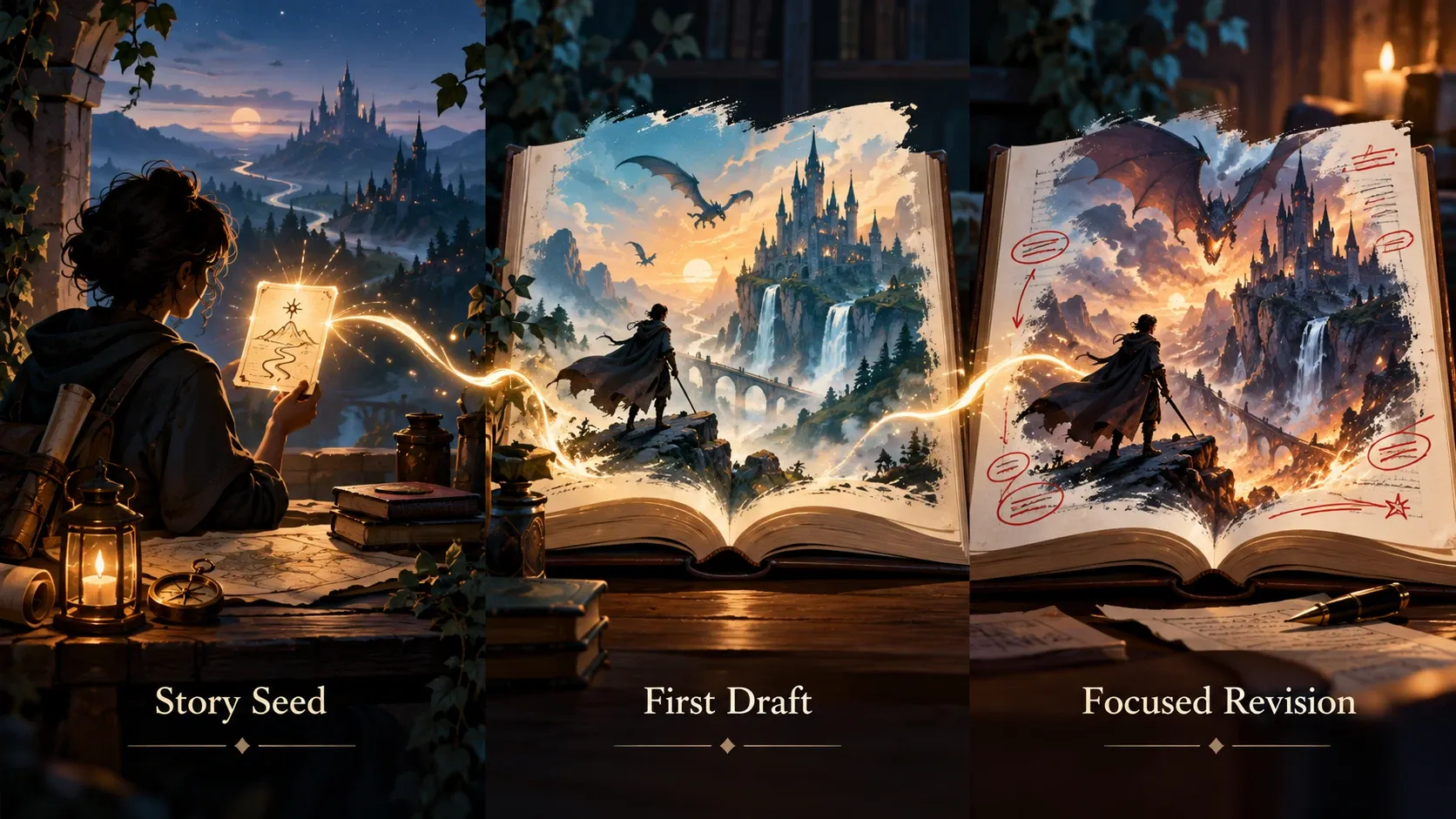
1. Open the AI Story Generator
Go to the AI Story Generator. In the request box, enter an idea, a character conflict, or a scene you want to continue. A complete plot is optional.
2. Specify the reading experience
Include the protagonist’s goal, the obstacle, point of view, tone, approximate length, and where the scene should stop.
“Write a 900-word fantasy opening in close third person. A mapmaker discovers that one street disappears from every map at sunrise. She needs to reach it before her brother does. Keep the tone tense and curious. End when she steps onto the street; do not explain its origin yet.”
3. Generate, then direct the next revision
Select Generate My Story. Read the draft for character logic and momentum. Give XPT one focused revision request at a time:
“Keep the events and point of view. Cut the opening exposition, make the mapmaker’s first decision more difficult, and let her brother’s presence emerge through a physical clue.”
4. Continue with a short continuity note
Before requesting another scene, restate the facts that must remain true: names, relationships, discoveries, and unanswered questions. This gives the next prompt a clear foundation.
Prompts for More Specific Stories
| Goal | Prompt |
|---|---|
| Dark fantasy | Create three premises about a healer whose cures require memories from willing donors. Give each premise a different moral conflict. |
| Mystery opening | Write an opening scene built around a clue the protagonist misunderstands. Make the clue meaningful on a second reading. |
| Character conflict | Create a scene between a retired con artist and the detective who ruined her career. Each needs something the other can provide. |
| Horror | Set a horror scene in a brightly lit supermarket at 3 a.m. Build unease through small inconsistencies. |
| Dialogue revision | Rewrite this exchange so both characters conceal what they want. Preserve the facts but add subtext: [paste dialogue]. |
| Scene continuation | Continue this scene without changing the established point of view, relationships, or timeline: [paste scene and notes]. |
| Alternative direction | Propose three next scenes: one that deepens a relationship, one that reveals a clue, and one that creates a setback. |
| Ending | Offer three endings that resolve this conflict but leave different emotional impressions: [paste premise]. |
For a longer project, move from scenes to a story bible and chapter plan with the AI Novel Generator. Review and rewrite the output before publishing; the strongest details should come from your own choices.