A good plot twist changes what the reader believes while making earlier details newly meaningful. You can use XPT to develop several possible reversals, check whether the clues are fair, and draft the moment of discovery.
The most useful order is: establish the truth, define the mistaken belief, plant clues, choose the reveal point, and test the consequences. An author’s account of writing twists offers the same core principle: the pieces should already exist inside the story before the reveal.
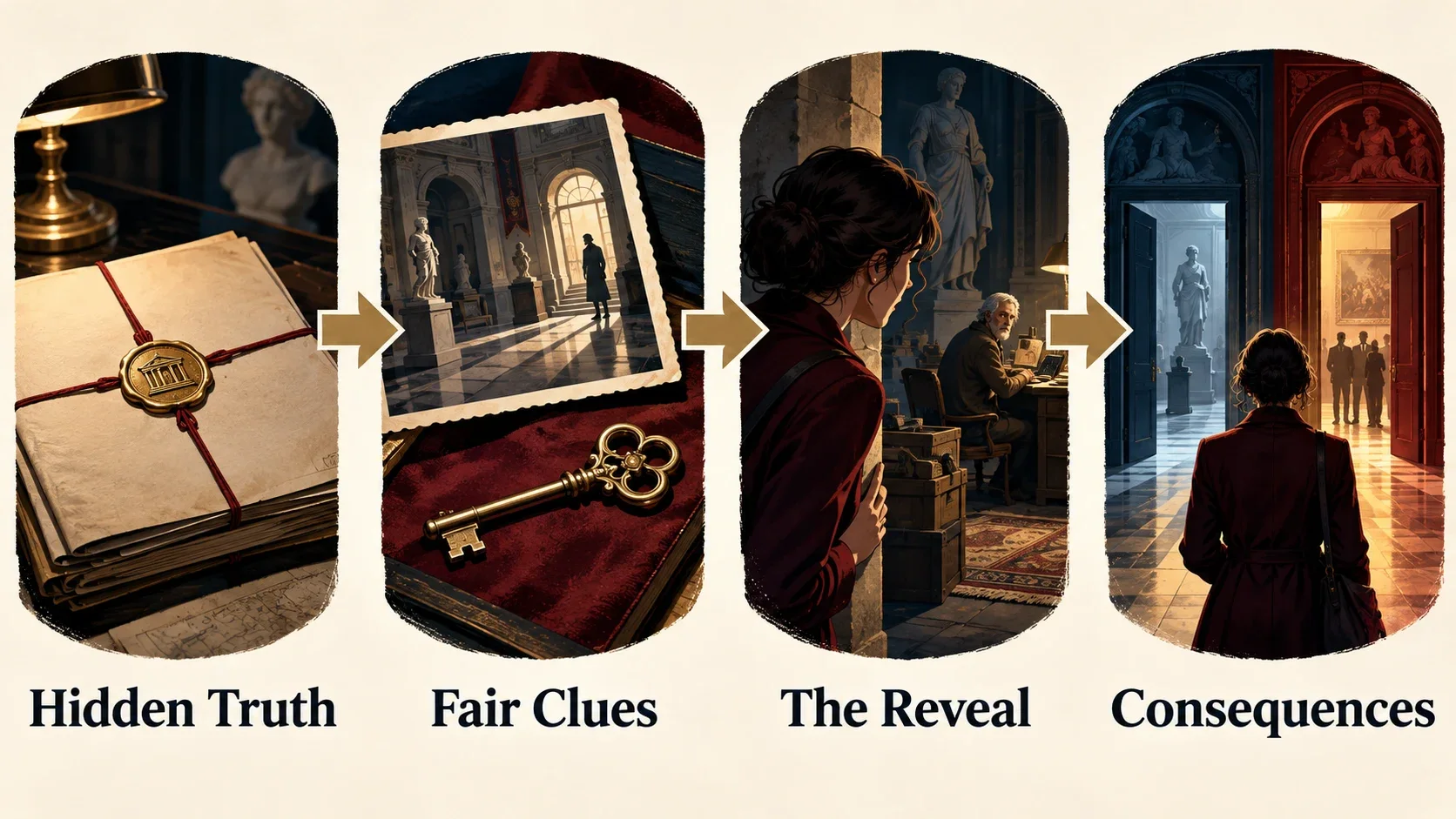
Step 1: Give XPT the Story as It Currently Exists
Open the AI Novel Generator. Paste a short premise or outline, including the protagonist’s goal, the current conflict, and what the reader believes.
“I’m writing a mystery about a museum curator who vanished after discovering a forgery. The protagonist believes the curator was abducted. Give me five possible twists rooted in the curator’s established motives. For each, explain what becomes true, what readers assumed, and how the protagonist’s next decision changes.”
Choose the reversal that creates the strongest consequence, rather than the one that merely sounds surprising.
Step 2: Build the Hidden Truth
Ask XPT to describe the real sequence of events before introducing misdirection.
“Use this twist: the curator staged her disappearance to expose the forgery ring. Write a private timeline of what happened, who knew, and why. Flag any action that would contradict the existing outline.”
Keep this timeline in your notes. It is the standard against which every clue and later scene can be checked.
Step 3: Create Clues With Two Readings
A fair clue makes sense before and after the reveal. Ask for several, then select only those that fit naturally into scenes you already need.
“Suggest six clues for this twist. For each clue, show the reader’s likely first interpretation and its meaning after the reveal. Avoid clues that require the narrator to hide something the viewpoint character clearly knows.”
For example, the curator’s carefully packed travel bag might first suggest an abductor preparing an escape. After the reveal, it points to a planned disappearance. The clue stays visible; its meaning changes.
Step 4: Place the Reveal Where It Forces a Choice
Tell XPT when the twist occurs and what problem the protagonist must face immediately afterward.
“The protagonist discovers the curator is alive at the midpoint. Give me three reveal scenes. In each version, the discovery must force a different decision about whether to trust the curator, protect the evidence, or warn the suspected forger.”
A midpoint twist should redirect the story. A late twist should pay off earlier choices and sharpen the ending.
Step 5: Audit the Twist Before Drafting
Use XPT as a skeptical reader:
“Review this outline for twist fairness. Identify clues that are too obvious, information withheld unfairly, timeline contradictions, and consequences that feel too small. Suggest precise fixes without changing the central reveal: [paste outline].”
Then ask it to draft the reveal scene. Keep the protagonist active: let them notice, infer, resist, and choose rather than listen to a long explanation.
Quick Plot Twist Test
| Question | If the answer is no |
|---|---|
| Can readers find earlier clues on a second reading? | Plant or revise clues. |
| Does the truth fit the timeline? | Repair the hidden sequence of events. |
| Does the twist grow from character motivation? | Rework the motive, not just the surprise. |
| Does the reveal change the next decision? | Add a meaningful consequence. |
| Can the scene reveal the truth without explaining every clue? | Let action and reaction carry more of the discovery. |
XPT’s AI Plot Generator helps develop the reversal and test its logic. When you are ready to turn the outline into prose, continue with the AI Story Generator. Keep the final choice of clues, pacing, and emotional meaning in your hands.