A horror story needs more than a frightening description. It needs a person who cannot dismiss the danger, a reason their first response fails, and a discovery that changes what they can do next. To write horror with AI, define those pressures, draft a short scene, and revise the sequence of consequences before adding more scares.
The practical advantage of AI is being able to compare possibilities: a sound might signal a haunting, a human intrusion, or a mistake the narrator refuses to acknowledge. You still choose which possibility serves the story. The tutorial below uses XPT to develop that choice, followed by ways to improve atmosphere, prompts, and the final reveal.
How to Develop a Horror Story with XPT
1. Start with an Anomaly and a Vulnerable Character
Open the AI Horror Story Generator. In the request, describe one observation that does not fit the setting and the person who notices it. Add a practical reason they cannot simply leave.
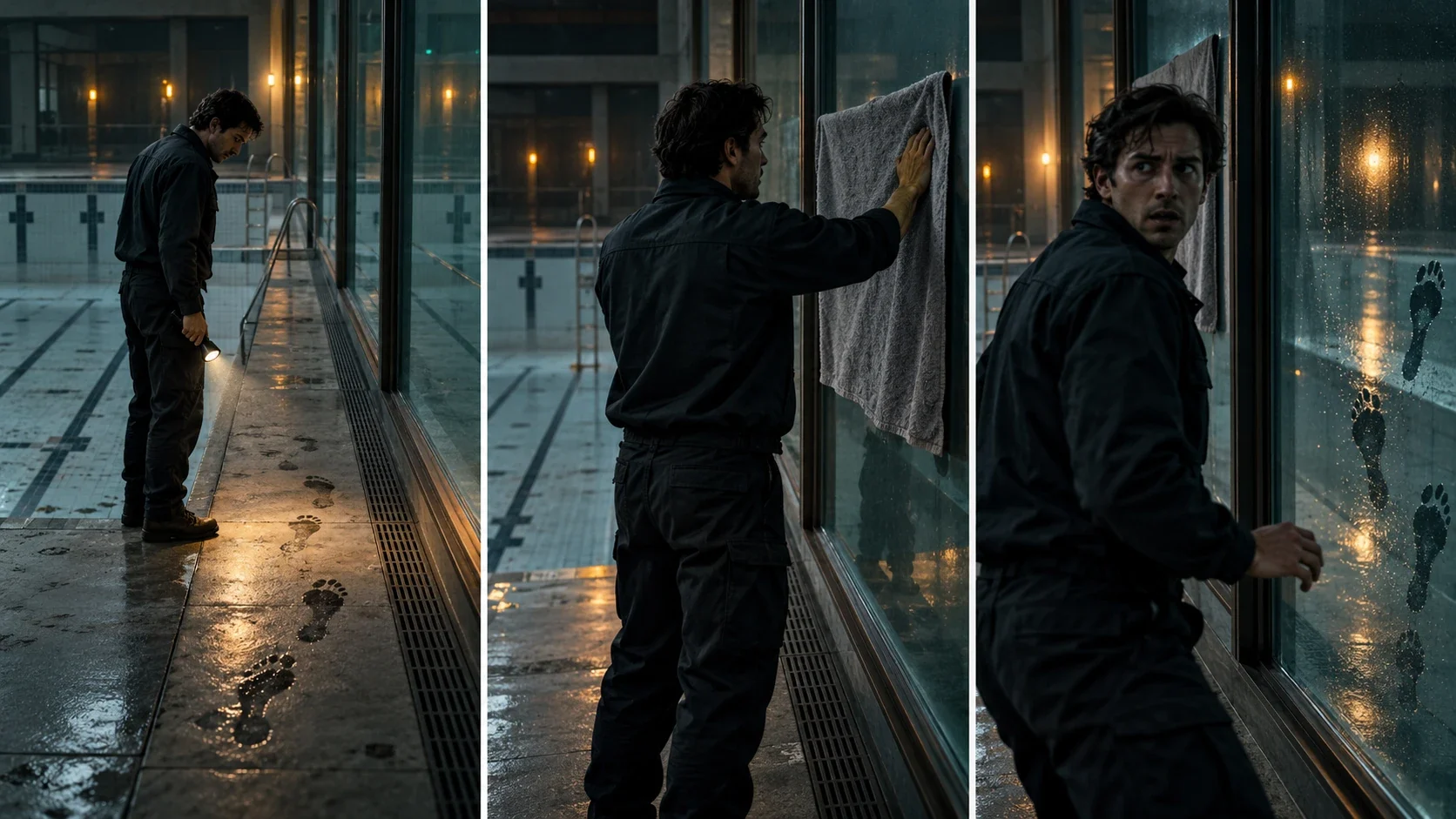
For an original example, imagine a caretaker closing a community swimming pool. Wet footprints appear around the locked spectator gallery, although the pool has been drained for repairs. The caretaker must finish an inspection before the building can reopen, and their younger brother is waiting outside for a ride home. This gives the scene something more immediate than an abstract wish to investigate.
Ask for three possible sources of pressure, not a complete story yet. Compare what each would make the caretaker do. Keep the direction that produces difficult decisions rather than merely unusual images.
2. Define the Threat's Limits
Tell XPT what triggers the danger, what it can affect, and what the protagonist initially misunderstands. You do not have to explain its entire origin. You do need enough consistency to judge whether later events follow the premise.
Perhaps the wet footprints only move when the caretaker looks at their reflection. A failed attempt to cover a mirror then makes sense within the story. A sudden unrelated ability to possess the brother would need preparation or a different premise.
“Develop three horror scene directions from this premise: [premise]. For each, give the protagonist's goal, the threat's observable rule, a plausible first response, and the consequence when that response fails. Use non-graphic psychological tension. Do not reveal the full origin. Keep the danger connected to the protagonist's choices. Return scene plans only; wait before drafting prose.”
3. Generate One Scene with a Specific Turn
Select a direction, include the accepted rules, and request a bounded scene. Define point of view, intensity, and the moment where the character's understanding changes. For the pool example, end when the caretaker realizes the wet trail is approaching from inside a reflection rather than across the floor.
Ask for details the character can perceive: condensation on a locked door, a familiar sound arriving from the wrong direction, or a movement visible only at an angle. Those details give you evidence to arrange. Repeatedly instructing the model to be terrifying gives you much less to evaluate.
4. Revise the Escalation Before Continuing
Read the draft and identify the action that causes the next problem. If the caretaker's attempted solution makes no difference, the scene may be repeating fear rather than advancing it. Request a focused revision that changes the consequence while preserving the threat's limits.
For a longer piece, the AI Story Outline Generator is a related route for arranging accepted turns into scenes. Carry your own rule notes into the next request and keep rejected alternatives out of the reference.
Write a Prompt That Controls the Reading Experience
Specify what readers should know and what should remain uncertain. “An ambiguous ending” can mean an unknown origin, an uncertain survivor, or an unresolved interpretation. Choose the uncertainty that matters instead of leaving every event unclear.
Also distinguish intensity from graphic detail. A quiet scene can create pressure through isolation, anticipation, or a shrinking set of choices. State subjects you want excluded and ask for tension through behavior and consequence. That gives the draft a useful target without requiring constant escalation in violence.
For voice, describe the narrator's attention. A maintenance worker may notice switches, access panels, and irregular sounds. A former swimmer may measure distance by lanes and breaths. Those habits can make the same pool feel different without changing the threat.
Make Each Scare Change the Situation
Use a simple sequence when checking a draft:
| Moment | What should change |
|---|---|
| First anomaly | The ordinary explanation becomes less convincing. |
| Attempted response | The character commits to an action with a cost. |
| Failed response | An escape route, assumption, or resource is lost. |
| New discovery | The character understands a limit or danger differently. |
| Final decision | They must act with that knowledge, not wait for rescue. |
The sequence is an editing aid, not a mandatory formula. A story may delay or reverse a beat. What matters is whether the reader can understand why the character's position has changed. Remove a scare that duplicates an earlier beat without adding consequence.
Keep Explanations Smaller Than the Fear
An origin story can make the threat understandable, but it can also reduce a disturbing presence to a familiar villain with a speech. Before including an explanation, ask whether it changes a decision. If it only answers background questions, consider saving it for later or leaving it out.
Concrete cause and effect can coexist with an uncertain origin. Readers may never learn why the reflection behaves this way while still understanding that looking away lets the trail approach. Protect that distinction when revising: mystery about the world does not require confusion about the scene.
Questions to Ask Before the Final Draft
Can the protagonist leave too easily? Give them a believable obligation, a physical constraint, or a cost they are willing to risk. Avoid making them ignore an obvious safe option without a reason.
Does the ending introduce a new power? Either establish evidence earlier or choose a resolution that uses the existing rule. Surprise works better when the earlier details support it on rereading.
Is the prose naming emotions instead of creating them? Cut repeated claims that the character is terrified. Keep the action, sensory observation, and choice that allow the reader to feel the pressure.
End with a Consequence That Lasts
Choose what the character understands or loses, then make the last image reflect that change. A horror ending can leave a question open while closing the immediate action. Start with one coherent scene and expand only after the threat, response, and consequence hold together.